Introduction
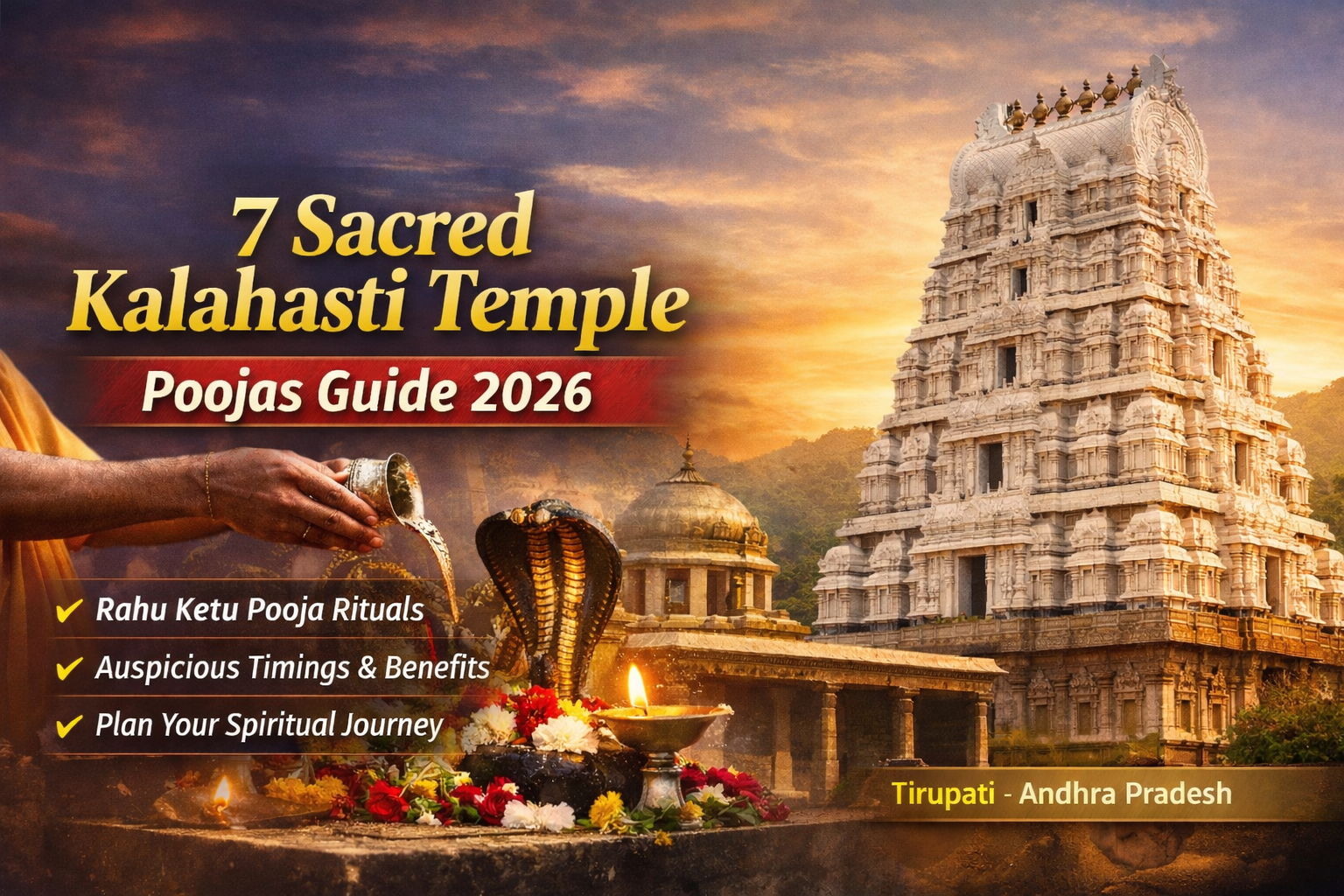
Kalahasti temple poojas represent the pinnacle of Vedic worship traditions, attracting thousands of devotees seeking divine blessings and spiritual transformation. Located just 36 kilometers from Tirupati in Andhra Pradesh, this ancient temple dedicated to Lord Shiva offers profound spiritual experiences through meticulously performed rituals that have been preserved for centuries.
Discovering the Divine Significance of Srikalahasti Temple
The Srikalahasti temple stands as one of India's most revered Shiva temples, famous for housing the Vayu Linga, representing wind among the five elements in the Panchabhoota Sthalams. This sacred shrine is also known as Dakshina Kailasam and Rahu-Ketu Kshetra, making it an essential pilgrimage destination for devotees seeking cosmic blessings and remedies for astrological afflictions.
The temple's spiritual significance extends beyond ordinary worship, offering devotees the unique opportunity to perform the highly sought-after Rahu Ketu Pooja at Kalahasti, which helps nullify planetary doshas and brings peace to one's life. The divine presence creates an atmosphere conducive to spiritual awakening and personal transformation.
Planning your visit from Chennai? Explore our Chennai to Kalahasti Tour Package for a comfortable and well-organized pilgrimage.
Understanding the Famous Rahu Ketu Pooja
What Makes Rahu Ketu Pooja Special
The Rahu Ketu Pooja at Srikalahasti stands as the temple's most distinguished ritual, drawing devotees from across the globe. This powerful Vedic ceremony specifically addresses the negative influences of the shadow planets Rahu and Ketu in one's horoscope. The astrological remedy pooja performed here is exceptionally potent due to the temple's unique cosmic positioning.
The Kalahasti Rahu Ketu ritual involves elaborate Vedic chanting and offerings performed by experienced temple priests who have mastered ancient mantras. This specialized planetary pooja typically takes 30 to 45 minutes and provides comprehensive relief from various life challenges caused by planetary afflictions.
Incredible Benefits of Rahu Ketu Pooja
Performing Rahu Ketu Pooja at Kalahasti temple offers numerous transformative benefits. The pregnancy-related dosha resolution helps couples facing difficulties in conceiving or experiencing complications during pregnancy. Many devotees have reported positive outcomes after performing this sacred ritual.
The marriage-related dosha nullification removes obstacles preventing marriage or causing discord in married life. The Rahu Ketu blessing brings harmony between partners, resolving conflicts and strengthening relationships.
For career growth promotion, this pooja removes professional blockages and opens new opportunities. The business growth enhancement attracts prosperity to entrepreneurial ventures. The family wellbeing support ensures peace and harmony within households. Additionally, Rahu Graha Shanti and Ketu Graha Shanti provide comprehensive planetary peace.
Best Days for Performing Rahu Ketu Pooja
Timing your Kalahasti temple visit correctly enhances the pooja's effectiveness. The most auspicious days for Rahu Ketu Pooja include Amavasya day (new moon), which represents the most powerful time. Sunday Rahu Kalam timings and Tuesday Rahu Kalam timings offer special significance.
During solar or lunar eclipse periods, the pooja's potency multiplies significantly. Rahu Peyarchi day and Ketu Peyarchi day (planetary transition days) are exceptionally auspicious. The combination of Sunday Amavasya Rahu Kalam timings creates ultimate alignment for maximum spiritual benefits.
To plan your pooja on the most auspicious day, check our detailed guide on the Best Time to Visit Kalahasti Temple.
Complete Rahu Ketu Pooja Procedure at Srikalahasti
Step-by-Step Rahu Ketu Pooja Ritual Process
The Rahu Ketu Pooja procedure at Kalahasti follows strict Vedic rituals performed at the sacred Srikalahasti Temple. Each step is designed to purify the mind, body, and soul while reducing planetary doshas.
Step 1: Purification Ritual
Devotees begin the Rahu Ketu Pooja at Kalahasti by taking a holy bath, symbolizing mental and physical cleansing before entering the temple.
Step 2: Temple Offerings
Traditional offerings such as flowers, fruits, betel leaves, and camphor are presented to the deities. These offerings represent devotion and surrender during the Kalahasti pooja.
Step 3: Ganapati Homam
The pooja starts with Ganapati Homam, invoking Lord Ganesha to remove obstacles and ensure the Rahu Ketu ritual proceeds without interruptions.
Step 4: Main Rahu Ketu Pooja
Experienced Vedic priests perform the Rahu Ketu Pooja ceremony by chanting powerful mantras to appease Rahu and Ketu, helping transform negative planetary effects into positive energy.
Step 5: Abhishekam and Personal Prayers
The ritual concludes with Abhishekam, where the deities are bathed with milk and ghee. Devotees then offer personal prayers seeking relief from marriage, pregnancy, career, and financial doshas.
Important Notes for Devotees
The Kalahasti pooja duration typically requires 30 to 45 minutes, though devotees should allocate additional time for temple darshan. The temple priest language assistance provides instructions in English, Telugu, and Tamil, accommodating devotees from different linguistic backgrounds.
The seating arrangement for pooja follows an organized system with devotees seated in batches within Mandapams. Support staff remain available to assist and ensure proper ritual observance.
Regarding post-pooja procedure, devotees should bathe after returning home. There is no mandatory dress code requirement, and no need to remove or discard clothes worn during the pooja.
Daily Temple Poojas and Timings
Temple Schedule and Darshan
The Kalahasti temple morning rituals begin at 5:00 AM when the temple opens. The temple darshan timings start at 6:30 AM, allowing early risers to experience peaceful morning atmosphere and witness the deity in serene glory.
The Srikalahasti temple timings extend from 5:00 AM to 9:00 PM, providing ample opportunity for visits. The general darshan timings operate from 6:30 AM to 8:30 PM. The average darshan duration typically ranges from 60 to 90 minutes, depending on crowd levels.
The morning abhishekam at Kalahasti involves bathing the deity with sacred substances including milk, honey, ghee, and sandalwood paste. This dawn purification ceremony symbolizes divine blessings and positive energy.
Combine Tirupati Balaji darshan with Kalahasti pooja by choosing our Tirupati Kalahasti Combined Tour Package.
Essential Temple Visit Guidelines
Dress Code Requirements
The Kalahashi temple dress code requires modest, traditional attire. For male devotees, appropriate men's temple attire includes dhoti with shirt, kurta with pyjama, or traditional Indian wear. Female devotees should wear women's temple clothing such as sarees, half sarees, or churidar with dupatta. The traditional dress for temple visit demonstrates respect for divine presence.
Photography and Temple Etiquette
Most sacred areas within Kalahasti maintain restrictions on photography and mobile phone usage. These temple protocol guidelines preserve the meditative atmosphere and protect privacy of fellow worshippers.
Planning Your Spiritual Journey from Chennai
Convenient Transportation Options
Reaching Kalahasti from Chennai becomes effortless with professional travel services. Padmavathi Travels specializes in providing Chennai to Kalahasti tour packages ensuring comfortable, hassle-free journeys. The well-organized car rental service offers various vehicle options to suit different group sizes and budgets.
The scenic drive from Chennai to Kalahasti covers approximately 150 kilometers, taking around 3 to 4 hours. The comfortable AC car journey with experienced drivers makes the pilgrimage pleasant and stress-free.
Tour Package Inclusions
Professional travel services include comprehensive benefits. The toll gate and permit taxes are covered, eliminating unexpected expenses. All car parking charges at the temple are included. The full car rental service provides door-to-door convenience with pickup and drop in Chennai at your preferred location. The driver's fee is included, with experienced drivers who know the route intimately.
For a comfortable stay near the temple, refer to our Kalahasti Temple Accommodation Guide.
Package Exclusions to Note
Understanding exclusions helps with budget planning. Accommodation and food costs remain the traveler's responsibility. Breakfast and lunch expenses are not covered, though drivers can recommend excellent local restaurants. Darshan tickets for special entry must be purchased separately. Extra charge for late-night services applies for very early pickups or late evening returns. Multiple pickup and drop locations incur additional charges.
Exploring Panchabhoota Sthalam Significance
Understanding the Vayu Linga
The Vayu Linga at Kalahasti represents one of five elements in Hindu cosmology. This wind element representation makes Srikalahasti unique among Shiva temples. The Panchabhoota Sthalam concept encompasses five temples representing earth, water, fire, air, and space, with Kalahasti embodying air.
Witnessing the eternal flame that flickers inside the sanctum despite no apparent wind source demonstrates the mysterious presence of Vayu, creating a powerful spiritual experience.
Dakshina Kailasam - The Southern Abode
Known as Dakshina Kailasam, Srikalahasti is considered the southern equivalent of Mount Kailash. This sacred Shiva dwelling designation elevates the temple's spiritual importance. Visiting Kalahasti as Dakshina Kailasam provides similar spiritual merit, making it accessible to devotees from South India.
Special Festival Celebrations
Maha Shivaratri celebrations at Kalahasti transform the temple into vibrant spiritual celebration. The night-long Shivaratri worship continues with elaborate rituals performed every three hours. The special abhishekam during Shivaratri witnesses thousands offering bilva leaves and flowers to Lord Shiva.
Throughout the year, the Kalahasti festival calendar includes numerous special occasions. The monthly Pradosham observances occur twice monthly during twilight hours, offering special darshan and extended prayer sessions.
Spiritual Benefits and Life Transformation
Regular worship at Kalahasti temple facilitates profound personal transformation. The spiritual growth benefits extend beyond material gains to include mental peace, emotional stability, and enhanced life satisfaction. Devotees consistently report reduced stress, increased clarity, and better decision-making abilities.
The planetary dosha remedies at Kalahasti address specific astrological challenges. The Rahu Ketu pooja effectiveness has been validated through centuries of devotee experiences. Many report significant positive changes in areas that were previously problematic.
Why Choose Professional Travel Services
Professional travel services provide well-experienced drivers who understand the route, temple protocols, and local customs. Their local area knowledge proves invaluable in navigating traffic and finding convenient parking.
The commitment to hassle-free travel ensures devotees can focus entirely on spiritual objectives. The 24/7 customer support availability means assistance is always available. The comfortable AC vehicle journey makes travel pleasant regardless of weather conditions.
Conclusion: Embracing Divine Blessings at Kalahasti
Kalahasti temple poojas offer transformative spiritual experiences rooted in ancient wisdom. Whether participating in the famous Rahu Ketu Pooja, daily temple rituals, or special festival celebrations, devotees find profound opportunities for divine connection and personal transformation.
The temple's unique position as home to the Vayu Linga, combined with its reputation as Dakshina Kailasam and Rahu-Ketu Kshetra, makes it an essential pilgrimage destination. Planning your visit with professional travel services from Chennai ensures a comfortable journey that allows complete focus on spiritual objectives.
Frequently Asked Questions – Srikalahasti Temple
1. What is Srikalahasti Temple famous for?
Srikalahasti Temple is famous for the Vayu Linga, one of the Panchabhoota Sthalams, and as a powerful Rahu-Ketu Kshetra known for planetary dosha remedies.
2. Why do people visit Kalahasti Temple?
Devotees visit Kalahasti to perform Rahu Ketu Pooja, experience the sacred Vayu Linga, and seek solutions for marriage, pregnancy, career, and business doshas.
3. Which day is best for Rahu Ketu Pooja at Kalahasti?
The best days for Rahu Ketu Pooja at Kalahasti are Amavasya, Sunday or Tuesday during Rahu Kalam, and Rahu or Ketu Peyarchi days.
4. Why is Rahu Ketu Pooja performed?
Rahu Ketu Pooja is performed to remove planetary doshas, bring career growth, resolve marriage and pregnancy issues, and achieve Rahu Graha Shanti and Ketu Graha Shanti.
5. Is there a dress code at Kalahashi Temple?
Yes, the Kalahasti Temple dress code requires traditional attire. Men should wear dhoti or kurta-pyjama, and women should wear saree or churidar with dupatta.
For bookings and inquiries, contact us at:
- Phone: +91-6384433111
- Email: padmavathitravelstnagar@gmail.com
- Website: www.padmavathitravel.com
- Address: Venkatanarayana Rd, Parthasarathi Puram, T. Nagar, Chennai-600017, Tamil Nadu.